Stain-Free Tablecloth for Restaurants
Choosing a tablecloth in restaurant, cafe or hotel management is not a simple decoration decision; It is a critical investment that directly affects operational efficiency and operating costs. Choosing the right textile for tables that get dirty dozens of times a day provides serious budget savings in the long run. In this guide, HORECA we examine the most accurate wholesale tablecloth purchasing criteria for the sector from an industry perspective.
What is a Stain-Free (Scarefree) Tablecloth?
Halk arasında “dertsiz masa örtüsü” olarak bilinen leke tutmayan örtüler, üzerine dökülen çay, şarap, yağ veya yemek sosu gibi sıvıların kumaş dokusuna nüfuz etmesini geciktiren teknolojik kumaşlardan üretilir. Yüzey gerilimi artırılmış bu kumaşlarda, sıvılar boncuklanarak yüzeyde kalır ve bir peçete yardımıyla kolayca temizlenir.
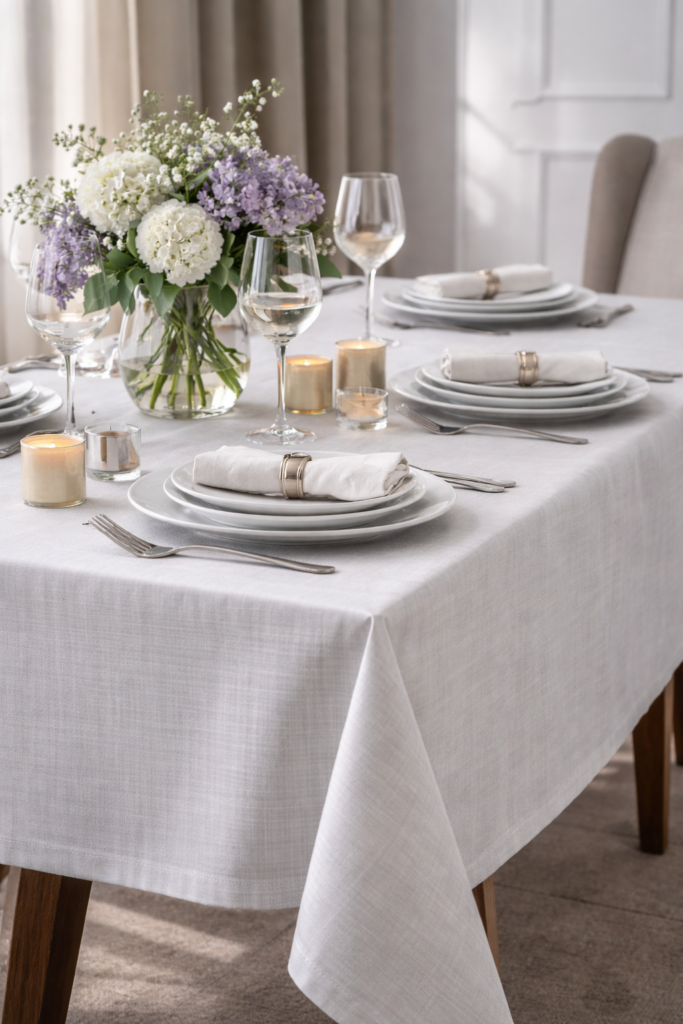
This article may interest you. Why is Choosing the Right Textile Manufacturer Critical?
Why Should Restaurants and Cafes Choose Stain-Resistant Fabric? (Business Benefits)
In our experience, using standard cotton cover in a high-circulation restaurant increases laundry costs to uncontrollable levels. The main advantages of stain-resistant fabrics to businesses are as follows:
- Low Washing Cost: Since the stain does not work deeply, it is cleaned in shorter programs with fewer chemicals.
- Personnel Time Saving: Speeds up desk change or cleaning between services.
- Longevity: The wear rate due to frequent washing is much lower than standard cotton fabrics.
For your wholesale purchasing requests and sample requests Nnovatex immediately with the expert team contact pass.
Stain Retardation Technology: Coating or Finishing?
Making a decision based solely on price is the biggest mistake made in this regard. In our opinion, the most critical criterion here is how the fabric acquires stain resistance.
- Superficial Coatings (We Do Not Recommend): They are chemicals that are sprayed on the fabric afterwards After 3-4 industrial washes, it loses its properties and the fabric hardens.
- Finishing Processed into Yarn (We Recommend): It is the treatment of threads with stain repellent technology during the weaving stage. The fabric remains draped (does not harden) and retains its properties for dozens of washes.
Misconceptions Are True
| Misconceptions | Honestly |
| Water slider fabric never stains. | Water repellent (Water Repellent) repels liquids, but oil-based tomato paste and sauces require an extra stain (Soil Release) finish. |
| Polyester tablecloth looks cheap and of poor quality. | Professionally produced cotton-touched (feeling) micro-polyester fabrics can be easily used in luxury restaurants (Fine Dining). |
| If washed to a high degree, stains will appear. | On the contrary, fabrics with a stain repellent finish should not be washed at temperatures exceeding 40°C, otherwise the technological texture will be damaged. |
HORECA Tablecloth Selection Matrix by Concept
One of the most common situations in the field is when cafes buy heavy banquet covers and luxury restaurants buy thin cafe covers. Make the right choice based on your business concept:
| Business Type | Recommended Fabric Type | Ideal Weight | Need for Stain Retention |
| Cafe / Brasserie | Cotton/Polyester Blend | 160-180 g/m² | Very High (Liquid spillage frequent) |
| Fine Dining Restaurant | Cotton Button Micro-Polyester | 200-220 g/m² | Medium/High (Wine and sauce stain) |
| Hotel Banquet/Wedding | 100% Polyester (Non-trimmed) | 180-200 g/m² | High (Heavy use and stack) |
3 Critical Mistakes Restaurant Operators Make in Choosing Tablecloths
In practice, the most common mistake is to try to buy HORECA products directly from wholesalers selling household products.
- Choosing Low Grammage Fabric: Fabrics with an M2 weight below 150 g slide on the table, make pots and make the quality of the restaurant look low.
- Wrong Thread Selection: Although 100% cotton products feel luxurious, they pull quickly in industrial washing and are a serious waste of time/cost to iron.
- Not Taking Measurement Fires into Account: Ordering without calculating the shares hanging from the table (usually 25-30 cm) and the 2-3% pull-out after washing, degrades the aesthetics of the tables.
Now to create a wholesale carefree tablecloth order that best suits the table sizes of your business communication go ahead.
How Many Washes Does Its Stain-Restriction Feature Last?
The most common question users ask is the lifespan of the stain resistance feature. Professionally produced, threaded industrial carefree tablecloths are average To 60 to 80 industrial washing cycles It retains water and stain repellent properties up to 80%. To prolong this period, the use of bleach (bleach) and excessively high heat should be avoided.
Checklist When Buying Wholesale Restaurant Tablecloth
If you’re signing with a new supplier or placing a bulk order, be sure to follow this checklist:
- [ ] Fabric composition (Ex: 100% PES or 70% PES / 30% Cotton) specified?
- [ ] Does the square meter weight suit my business type? (At least 180 g/m²)
- [ ] Have stain repellent (Soil Release) and water repellent (Water Repellent) finishes been made?
- [ ] Are there industrial washing and ironing instructions for the fabric?
- [ ] Is there paint fastness (no fade guarantee)?
Meeting all these quality standards Nnovatex get a quote for restaurant tablecloths and increase your business efficiency.
Frequently asked questions
At what temperature is the carefree tablecloth machine washed?
It is generally recommended to wash stain-resistant fabrics with bleach-free detergents at a temperature of 30°C–40°C to avoid damage to their technological finishes.
How far should the tablecloth hang from the table?
In standard restaurant use, the drape hanging 25 cm to 30 cm from each edge of the table provides the ideal aesthetic appearance. On banquet (banquet) tables, this sagging can be up to the ground (approximately 70-75 cm).
Does a hot plate damage a carefree tablecloth?
Serving plates at standard temperature will not cause harm. However, extremely hot cast pans or casseroles fresh from a fire or oven can cause melting or scarring of synthetic blended fabrics; A litter should definitely be used.